Motorcycle Accident Lawyers in Chicago, IL
Willens & Baez is a top-rated law firm with an award-winning team of Chicago Personal Injury Lawyers and Motorcycle Accident Attorneys who can help you when you have been injured in a motorcycle accident. Since we charge no legal fees, unless and until we succeed in obtaining a monetary recovery for you, you can count on us fighting hard to get you the compensation you need and deserve.
We know that an injury case has the potential to take over a person’s life, making it difficult to move forward. People turn to us for the dedicated, caring help they require, regardless of the type of accident they were in or the type of injury sustained. We want to help them take control of their situation so they can focus on what matters most — getting back on track. This is also why many of our firm’s cases are referred to us from other lawyers and law firms who trust us to handle their friends, family members and clients’ personal injury cases.
Why Let Willens & Baez handle your Chicago Motorcycle Accident?
No matter what the problem is, we are here to help. After a motorcycle accident, insurance companies may want to work out a quick settlement that makes sense for their bottom line. They will not take your specific needs into consideration. The cost of repairing your bike will be minor when compared with your medical bills and lost wages. We want to make certain that you get everything you need and deserve. If you have been in a motorcycle accident, you will likely need someone to fight your legal battles while you take time to recover. You may need the services of an experienced motorcycle accident lawyer.
Willens & Baez serves Chicago and surrounding areas. We are available 24/7. If you can’t come to us, we’ll arrange to come to you. Your consultation with us is free.
Call (312) 957-4166 For a Free Consultation
Need an Experienced Chicago Motorcycle Accident Attorney?
When you deserve full compensation after a motorcycle accident, don’t settle for less. Let Willens Injury Law fight for you.
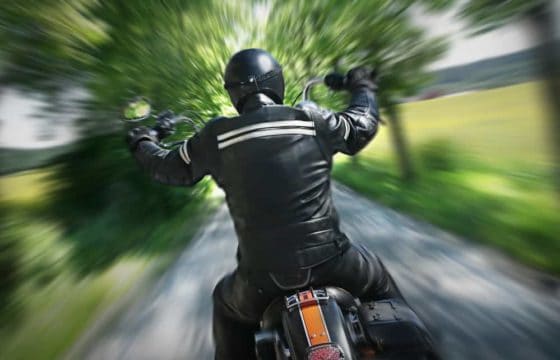
When it comes to motorcycles, we know that no matter how careful you are, you cannot control the choices of truck and car drivers around you. As the saying goes, “there are those who have been in accidents and those who are likely to be in accidents.”
Unfortunately, with motorcycles, there is more risk for serious injuries. While standard vehicles have airbags and other devices to protect its occupants, motorcycles do not. Sometimes, the only protection you have on a motorcycle is the clothing you are wearing at the time your body hits the pavement.
Thank you so much for the hard work you all did on my behalf. I appreciate your knowledge and advice. You made an unpleasant experience as easy for me as possible.
– T.W. a former client
If you have been hurt in an Illinois motorcycle accident, insurance companies may want to reach a quick settlement at an amount that suits their bottom line but not yours. This has happened to so many motorcyclists, even those who have suffered severe injuries that deserved maximum compensation. Sadly, many end up accepting early offers from insurers, not realizing they could fight for much more.
You don’t have to settle for less than what you deserve. Let a skilled Chicago motorcycle accident attorney at Willens & Baez help you obtain full compensation for your motorcycle injuries.
Motorcycle Accident Facts In Illinois
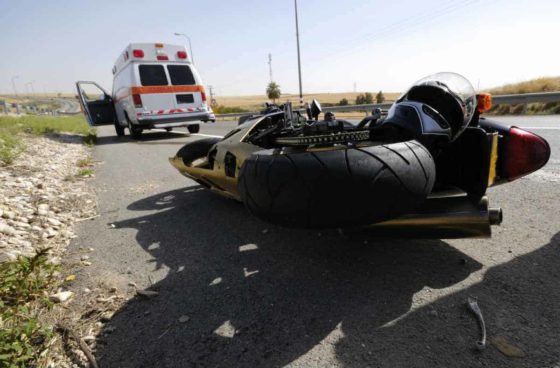 Did you know that Illinois ranks ninth among all US states in terms of motorcyclist fatalities? This is according to a report by the Governors Highway Safety Association. Our local statistics support this regrettable fact, showing that thousands of motorcycle riders get hurt on Illinois roads each year.
The latest data from the Illinois Department of Transportation (IDOT) reveals that in 2015 alone, there were 3,506 motorcycle crashes in the state. Some 2,643 motorcyclists were injured and 147 were killed in these accidents. This number of motorcycle fatalities actually increased by 24.6 percent compared to that in 2014.
The IDOT report also shows how motorcycle riders were much more likely than non-motorcyclists to get injured or killed in crashes. From the motorcycle accidents in 2015, only 208 non-motorcyclists were injured and 4 were killed. Compare that to the motorcyclist numbers above and you’ll see a massive difference.
Many of the motorcycle accidents occurred in the Chicago area. In that year, 277 motorcyclists were injured and 14 were killed in Chicago. This comes as no surprise since motorcycle crashes typically occur on urban roads.
What is unfortunate, however, is that numerous motorcyclists continue to suffer from crashes despite modern safety measures. Helmets, high-visibility clothing, jackets, pants, and gloves have all been developed to provide more protection to riders. In addition, the IDOT provides free motorcycle training to Illinois residents, aiming to improve their safety on the road. Still, as the statistics show, there is much left to be done to ensure motorcycle safety.
Causes Of Motorcycle Accidents
 It is true that in many motorcycle crashes, the person at fault is the rider himself. But there are also numerous cases of motorcycle accidents caused by car drivers and other factors. Take a look at these common causes behind motorcycle accidents:
- Distracted Drivers: This is a top cause of accidents in traffic general, as negligent vehicle drivers still continue to text or use other devices while behind the wheel. Types of Distracted Driving Accidents
- Making a Turn: A car making a left turn in front of a motorcycle is considered the single most risky scenario for motorcyclists. Generally, when a vehicle attempts to make a turn, it poses a risk for motorcycles because they are smaller and harder to spot. Left Hand Turn Motorcycle Accidents
- Unsafe Lane Change: Again, because a motorcycle may not be seen so easily, a vehicle may unsafely try to switch lanes in front of it. For a motorcycle that’s traveling straight at regular speed, the chances of a collision greatly increase.
- Dooring: Opening a car door seems harmless, but when an occupant of a car or any other vehicle opens its door in front of a moving motorcycle, the resulting injuries can be serious.5 Common Causes of Motorcycle Accidents From An Open Car Door
- Overtaking: Whether it’s a motorcycle or a larger vehicle that tries to overtake, the result could be a disastrous rear-end crash. Facts About Rear End Motorcycle Accidents
- Lane Splitting: This is when a motorcyclist squeezes between stopped cars in a traffic jam. This practice is a gray area in other states, but in Illinois, it is illegal.
- Road Debris and Other Hazards: Motorcycles can lose balance when it comes in contact with gravel on the pavement, puddles, or potholes. In some cases, a public agency or government body may be held accountable if it was negligent in its duty to keep road conditions safe. Is Nighttime Motorcycle Riding Riskier?
- Bad Weather: This is an all-too-familiar situation in Illinois, but it is more dangerous for motorcyclists as their vehicles can tumble more easily.
- Animals/Wildlife: Animals such as deer are most active at dawn and dusk, making them more startling when motorists spot them on the road.
Serious Motorcycle Crash Injuries
Some bikers are lucky enough to walk away from an accident with nothing but a scratch. But all too often, motorcyclists get the serious end of a collision. These are examples of motorcycle injuries that are severe enough to land someone in the hospital and demand compensation:
- Road Rash: Calling it a simple ‘rash’ can be an understatement. When the skin is wounded due to abrasion with road surfaces, the pain can be excruciating and there is a risk of infections and scarring.
- Traumatic brain injury: While wearing a helmet greatly reduces the severity of a head injury, a strong blow to the head can cause more than mild concussions. TBI may not immediately show symptoms, yet its effects can be long-term. So even if you feel fine, it is worth it to have your head checked by a doctor.
- Neck/Spine injury: If the neck suffers from a forceful jolt during an accident, potential injuries include not just neck and back pains but also life-altering ones such as paralysis and breathing problems.
- Biker’s arm: This is the term for arm injuries that result from using your arm to cushion yourself in the crash. The arm takes the brunt of the impact, making it vulnerable to nerve damage, muscle damage, and broken bones. Biker’s Arm Among Most Common Injury in a Motorcycle Accident
- Facial injuries: Facial lacerations, disfigurement, and eye injuries are unfortunately still common among motorcycle riders. Some victims even have to undergo facial amputations such as of the nose and lips.
Read More: Most Common Motorcycle Accident Injuries
What You May Be Entitled To
If someone else’s negligence caused or contributed to your motorcycle injuries, you have the right to claim monetary reimbursement. This compensation may cover not just your hospital bills but other damages as well. These are some damages you may typically be entitled to:
- Medical Expenses
- Rehabilitation Expense
- Lost Income
- Lost Ability to Earn
- Pain and Suffering
- Emotional Distress
- Psychological
- Damage To Your Motorcycle and Other Property
In a worst-case scenario, if a loved one has died in your motorcycle accident, you may be able to pursue a wrongful death case. While this can never replace the life lost, a successful wrongful death claim can provide you some relief. You may be compensated for losses such as funeral and burial expenses, lost companionship, and lost benefits. That’s why it’s important to reach out to an experienced motorcycle accident lawyer in Chicago to find out what you may be entitled to.
What If You Were At Fault In Your Motorcycle Accident?
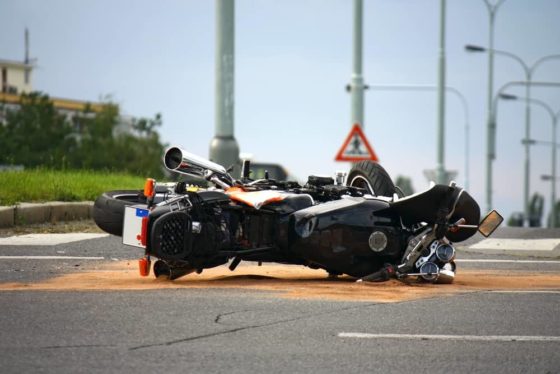 If you believe that you are partially responsible for your motorcycle crash, you may still have a chance to get reimbursed. Illinois law follows the concept of comparative negligence, which means that the court looks into how much each party contributed to the accident. Your compensation may be reduced according to how much your fault was. For example, if the court finds that you were 20 percent at-fault, your compensation will be reduced by 20 percent.
Despite this, it is crucial for you to avoid taking the blame right after the accident. It’s best not to jump to conclusions – proper investigation may later find that someone else was largely or wholly responsible for your injuries.
More importantly, avoid speaking to insurance adjusters and representatives, as they could use your statements to undermine your claim. Even saying “I’m sorry” could be taken as an admission of your fault. Instead, contact a lawyer right away to speak for you. Your Chicago motorcycle accident lawyer will also help you get to the bottom of your case and protect your best interests.
Claiming Compensation from Uninsured and Underinsured Motorcyclists
 The uninsured or underinsured coverage may be a part of your regular insurance plan or an add-on to your existing policy. It is always a good idea to check with your insurance provider whether your existing auto insurance policy provides compensation for expenses that might occur as a result of a motorcycle accident caused by uninsured or underinsured motorists. You can easily include it in your policy with a small increase in your premium amount. This coverage may help you recover financial compensation from your insurance company if the party at fault does not have enough insurance.
Auto insurance policies often provide both uninsured and underinsured coverage. In general, first, claim the full compensation amount from the party at fault, but if the responsible party’s insurance lacks sufficient coverage, claim the difference between your total expenses and the responsible party’s coverage from your own insurance company. In some cases, however, recovering from two insurance companies would be challenging, because each company may try to avoid paying the full amount.
Ensuring A Successful Claim: What To Do After A Chicago Motorcycle Accident
In the aftermath of a crash, you likely feel confused and unsure of what to do. But right after the incident, even at the scene itself, factors will crop up that can make or break your compensation claim later on. Remember these four things to do right after your motorcycle crash:
- Get Medical Attention: Many motorcycle riders don’t feel hurt right away as adrenalin rushes through the body during a crash, masking the immediate pain. For the sake of your health as well as your claim, you must let a medical professional check the true extent of your injuries.
- Report the Accident: As soon as you can, call the police and make an accident report. This document can be an important piece of evidence in your claim, so make sure to get a copy or at least take note of the report number.
- Gather Evidence: Take photos of the accident scene, the damage to your motorcycle, and your injuries. If you can, talk to people in the area who may have witnessed the crash and take their contact details. In the days that follow, remember to keep any related documentation such as medical records, hospital bills, pharmacy receipts, and motorcycle repair bills.
- Contact an Attorney: Before giving out any statement or signing anything, it’s crucial to have a lawyer on your side to guide you. Many accident victims make costly mistakes such as settling for early insurance offers or signing away their right to sue. An experienced accident lawyer should protect your rights and advise you on your best legal options.
Important Facts About Motorcycle Accident Lawsuits
A motorcycle offers no protection to its riders and there is no cushion when the motorcycle comes in contact with another motor vehicle. Motorcycle lawsuits often result in high awards as the awards are based on the extent of the injuries suffered in the accident. There are some points that one should know about motorcycle accidents and the resulting lawsuits.
Automobiles Are the Largest Cause of Motorcycle Accidents
As many as 75% of motorcycle accidents are caused by automobiles. It is difficult for a motor vehicle driver to spot a motorcyclist on the road, and most motorcycle crashes are the fault of the automobile driver and not of the motorcyclist.
Motorcycle Accidents Involving Negligence
Illinois state law requires anyone who drives a vehicle, including an automobile and a motorcycle, to use reasonable care while on the road. They must drive sensibly and cautiously, follow traffic signs, not run stop signs, and obey posted speed limits. If a driver fails to do so, it may amount to negligence. Most motorcycle accident lawsuits are based on the theory of negligence, for example, the plaintiff alledges that the other driver did not exercise due care not to cause injury to someone else on the road. The plaintiff also needs to prove that the other driver’s negligence caused him or her injury.
Passengers May File a Lawsuit Against a Motorcyclist
In some cases a motorcyclist is the negligent party and injuries can result if the motorcyclist fails to exercise due care while operating the motorcycle. A motorcyclist may ride aggressively or recklessly, may cut off a vehicle too closely, wave in and out of traffic, or turn at high speed. If an accident is caused by the negligence of a motorcyclist, any passengers who are injured may file a lawsuit against the motorcyclist.
Illinois Statute of Limitations for Personal Injury
Each state has a statute of limitations for personal injury lawsuits and this applies to motorcycle accident lawsuits as well. In Chicago, a personal injury lawsuit must be filed within two years of discovering the injury. It is compulsory to file the lawsuit within the set time limit or your legal rights to obtain damages may be jeopardized.
The Anatomy of a Motorcycle Accident
For example, there is no protective barrier between the motorcyclist and the road. Other drivers do not always easily see motorcycles, leaving a motorcycle rider at a greater risk for an accident and injuries.
Motorcycle Accident Statistics
Statistics reveal that motorcyclists face a high risk of accidents and injuries. According to the National Highway Traffic Safety Administration (NHTSA), motorcycles account for about 3 percent of the total registered vehicles in the United States, but motorcycle accidents are responsible for about 14 percent of highway fatalities each year. In addition, close to 80 percent of motorcycle accidents result in injury or death. This is in comparison to around 20 percent for other motor vehicle accidents.
In 2012, NHTSA published a report that revealed the vulnerability of motorcycle riders on U.S. roads. According to the study, for every registered vehicle, the fatality rate for a motorcycle rider was 6 times higher than that of passenger car occupants. In 50 percent of fatal crashes, the motorcycle collided with another motor vehicle.
Unique Risks Faced by Motorcyclists
- Road hazards: Minor road hazards that may not be noticeable to a motor vehicle can be a major risk for motorcycle riders. These hazards include puddles, potholes, debris, oil slicks, uneven pavement, railroad tracks, and ruts.
- Visual recognition: Motorcycles are usually hard to spot as they easily get obscured by larger vehicles on the road or by weather conditions. This problem mainly occurs in intersections where almost 70 percent of motorcycle accidents occur.
- Riding skills: Riding a motorcycle requires physical coordination and skill compared to driving a car. If the rider lacks basic riding skills or fails to understand the inherent operating characteristics of the motorcycle, then the chances of an accident become very high.
- Speed wobble accidents: At higher speeds, the front side of the motorcycle tends to become unstable and may start to wobble. This often happens because of the misalignment of one of the tires of the motorcycle.
Is It Important to Speak With a Lawyer After a Motorcycle Accident?
Often, the driver of a car involved in a motorcycle accident escapes completely unscathed, while the motorcyclist suffers severe injuries and may even be killed. Even with a helmet and other protective gear, a motorcyclist is always at a greater risk of an injury.
In addition to crashes with other motor vehicles on the road, motorcycle accidents may also occur because of poor road and weather conditions. Irrespective of the cause of the accident, an injured motorcyclist typically has to deal with huge medical bills, repair costs, and may even be rendered completely disabled. He or she may never be able to return to work in order to earn a living.
If a motorcycle accident is the result of someone else’s negligence, an injured motorcyclist can claim compensation for the injuries and losses suffered as a result. Many motorcyclists often feel confused about hiring a motorcycle accident lawyer. They may feel that because their injuries are evident and the fault is absolutely clear, they will receive the benefits they deserve without legal assistance.
Filing a Lawsuit to Recover Damages
Receiving compensation for damages from a motorcycle accident may not be as simple as you think. Insurance companies have many defenses and proving your case might be difficult unless you have a competent personal injury attorney by your side. If you have been pushed off the road by a drunk, distracted, or otherwise negligent driver, it is important to speak with a motorcycle accident attorney in Chicago as soon as possible. An experienced attorney can evaluate your case for free and help you determine what you next step should be.
Motorbike Accident Resources
- Facts About Rear-End Motorcycle Accidents
- Illinois Motorcycle Helmet Laws
- Common Causes of Motorcycle Accidents in Chicago
- Filing a Wrongful Death Claim in Illinois From a Motorcycle Accident